
Surface Finishes for CNC Parts
Anodizing, powder coat, bead blast, electropolish and more — complete surface finish guide with Ra values, cost modifiers and compatibility for every manufacturing application.

Quick Reference Table
| Finish | Compatible Materials | Ra (µm) | Thickness (µm) | Corrosion Resistance | Hardness | Cost Modifier | Best For |
|---|---|---|---|---|---|---|---|
| As-Machined | All | 0.8–3.2 | — | None added | Base material | Included | Prototypes, internal parts |
| Bead Blast | All metals | 1.0–2.0 | <5 | Slight improvement | Slight work-harden | +5% | Uniform matte appearance |
| Anodize Type II | Aluminium | 0.4–1.6 | 5–25 | Good | ~30 HRC equiv. | +15% | Consumer products, cosmetic |
| Anodize Type III | Aluminium | 0.4–1.6 | 25–150 | Excellent | 60–70 HRC equiv. | +30% | Wear parts, aerospace |
| Black Anodize | Aluminium | 0.4–1.6 | 5–25 | Good | ~30 HRC equiv. | +20% | Thermal, optical, cosmetic |
| Powder Coat | Steel, Aluminium | Smooth to texture | 60–100 | Very Good | 2H–4H pencil | +20% | Structural, outdoor parts |
| Electropolish | Stainless Steel | 0.1–0.4 | Removes 5–15 | Superior | Base material | +25% | Medical, food, pharma |
| Passivation | Stainless Steel | Unchanged | ~4 nm | Excellent | Unchanged | +10% | Standard stainless treatment |
| Zinc Plating | Steel | Unchanged | 5–25 | Good | Slight increase | +15% | Fasteners, brackets |
| Nickel Plating | Steel, Brass, Cu | Smooth | 5–50 | Very Good | +2–4 HRC | +35% | Wear, corrosion, appearance |
| Chrome Plating | Steel | Mirror | 2–25 | Very Good | 68–72 HRC | +50% | Hydraulic rods, gauges |
In-House & Partner Finishing at Survi
Survi Engineering manages the complete finishing supply chain — from bead blasting and anodizing to electropolish and precision plating — through vetted finishing partners in Pune who operate under our quality programme. You receive a single quotation, single purchase order, and single point of contact for machining and finishing combined.
All finishing lots are tracked with our internal job cards. When a finish affects tight tolerances (thread fits, bore diameters, mating flanges), our quality team plans masking and post-finish dimensional verification before dispatch. Finishing certificates and process records are available on request for aerospace, medical and defence orders.
As-Machined
As-Machined (No Finish)
Default CNC surface direct from the machine
As-machined parts have visible tool marks and a metallic lustre. Surface roughness depends on toolpath strategy and final pass parameters. Suitable for prototypes, internal components and parts that will receive a secondary finish elsewhere in the supply chain.
Mechanical Finishes
Bead Blast Available on All Metals
Glass or ceramic beads propelled at the surface under compressed air
Bead blasting produces a uniform matte or satin surface by removing machining marks and creating a consistent texture. It provides a slight compressive stress in the surface layer which mildly improves fatigue life. Often used as a pre-treatment before anodizing or powder coating to ensure uniform finish adhesion.
Anodizing (Aluminium Only)
Anodize Type II Standard
Sulphuric acid anodizing, 5–25 µm — the most common anodizing process
Produces a porous oxide layer that can be dyed in many colours before sealing. Provides good corrosion resistance and a clean cosmetic appearance. Standard across consumer electronics, automotive trim and industrial equipment.
Anodize Type III Hard Coat
Hard anodizing, 25–150 µm — maximum wear and abrasion resistance
Much thicker and denser oxide layer than Type II. Hardness equivalent to 60–70 HRC makes it suitable for sliding wear applications — pistons, valve bodies, hydraulic components and aerospace parts. Typically dark grey to black in appearance; can be dyed but colour range is limited.
Anodizing: The Premier Aluminium Finish
Anodizing is not just a coating — it is an electrochemical conversion of the aluminium surface itself into a hard aluminium oxide. Unlike paint, it cannot peel or chip. Type II (standard anodize) is the default for most consumer and industrial aluminium parts, delivering clean colour, uniform texture, and meaningful corrosion resistance at a modest cost premium.
Type III (hard anodize) takes this further: the 25–150 µm oxide layer approaches ceramic hardness (60–70 HRC equivalent), making it ideal for sliding wear surfaces such as pneumatic cylinder bores, valve bodies and UAV structural brackets. When specifying hard anodize, always design in ~0.05 mm extra clearance on bored features to account for dimensional growth.

Paint & Coating Finishes
Powder Coat Steel & Aluminium
Electrostatically applied dry powder, cured at ~200°C — available in thousands of RAL colours
Powder coating produces a hard, durable paint film that outperforms liquid paint in UV resistance, impact resistance and chemical resistance. Available in gloss, satin, matte and textured finishes. The 60–100 µm build-up means tight-tolerance holes must be masked or specified with powder coat allowance. Ideal for structural steel brackets, outdoor aluminium enclosures and any part needing long-term colour stability.
Stainless Steel Finishes
Passivation Standard for SS
Chemical removal of free iron from the surface using citric or nitric acid
Passivation restores and maximises the chromium oxide passive layer on stainless steel, removing free iron introduced during machining that could cause surface rust. It does not change appearance or dimensions. Standard treatment for any stainless part going into corrosive, medical or food environments. Citric acid passivation (per ASTM A967) is the modern preferred method over nitric acid — safer and equally effective.
Electropolish Medical / Food Grade
Electrochemical material removal that smooths and brightens the surface
Electropolishing is the reverse of electroplating — it removes a thin layer (5–15 µm) of material, eliminating micro-roughness and producing a mirror-like surface with Ra as low as 0.1 µm. Dramatically improves corrosion resistance and eliminates bacteria traps — the standard finish for pharmaceutical, medical device and food processing equipment. Also used for stainless implants and semiconductor components.
Plating Finishes
Zinc Plating Cost-Effective
The standard corrosion protection for carbon steel fasteners and brackets. Zinc acts as a sacrificial anode, protecting the base steel even if the coating is scratched. Available in clear, yellow and black chromate conversion coatings.
Nickel Plating
Excellent wear resistance and a bright decorative appearance. Electroless nickel provides uniform coverage on complex geometries. Used for electronic connectors, moulds and parts requiring both wear protection and corrosion resistance.
Hard Chrome
Extremely hard (68–72 HRC) with a mirror finish. Standard for hydraulic cylinder rods, injection moulds and precision gauges where dimensional accuracy and wear life are critical. Being phased out in some regions due to hexavalent chromium regulations.
Plating for Function, Not Just Appearance
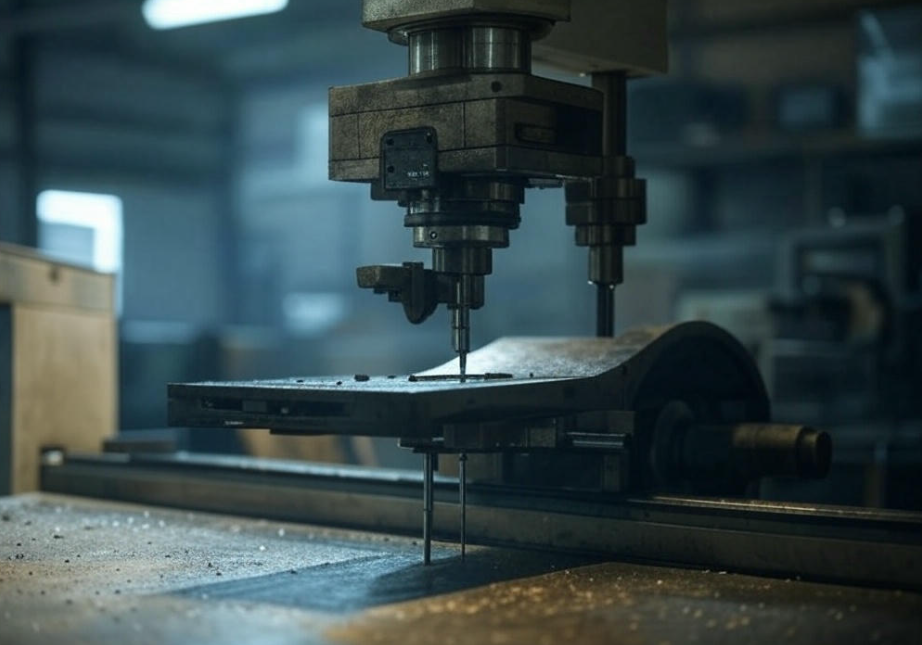
Plating finishes serve functional purposes beyond aesthetics: zinc protects carbon steel from sacrificial corrosion; electroless nickel provides uniform wear protection on complex 3D geometries that rack-plating cannot coat evenly; hard chrome delivers the extreme hardness needed for hydraulic cylinder rods and precision gauges.
When plating is specified on parts with threaded features, always state whether threads should be plated or masked. Plating inside threads changes the effective pitch diameter and can prevent assembly with mating fasteners if not designed in from the start. Our engineering team reviews every plated part drawing before quoting to flag any potential fit-up issues.
How to Specify a Finish
When placing your order with Survi Engineering, specify:
- Finish type — e.g., "Type II Clear Anodize" or "Electropolish + Passivation"
- Colour (if applicable) — RAL code or Pantone reference for powder coat; "clear", "black", or custom dye colour for anodizing
- Masking requirements — identify threads, precision bores or mating surfaces that should not receive the finish
- Surface to finish — "all exterior surfaces" vs "per drawing callout only"
- Standard reference — e.g., MIL-A-8625 Type II for anodize, ASTM A967 for passivation
Specify Your Finish in the Quote
All finishes listed on this page are available at Survi Engineering. Upload your CAD file and specify your finish requirement — we'll include it in your instant quote.
Frequently Asked Questions
We understand that choosing a manufacturing partner requires clarity and confidence. Our FAQs address common queries about pricing, quality, delivery timelines, quotations, and service support. Whether you're exploring our cost-effective solutions or need details on our processes, you'll find the answers here.
How does Survi offer pricing that is 75% lower than the U.S. and Chinese market?
At Survi, we optimize costs through efficient manufacturing processes, strategic sourcing, and lean operations. By leveraging advanced automation and minimizing overhead, we provide high-quality parts at a fraction of the typical market price—without compromising on precision or durability.
How does Survi ensure high-quality parts?
Quality is at the core of everything we do. We use cutting-edge technology, rigorous quality control processes, and skilled craftsmanship to meet and exceed industry standards. Every part undergoes thorough inspection to ensure precision, durability, and compliance with your specifications.
What is your typical lead time for orders?
Lead times vary based on the complexity and volume of the order, but we prioritize timely delivery. Most projects are completed within a few days to a couple of weeks. We work closely with our clients to ensure deadlines are met without compromising quality.
How quickly can I get a quotation?
We provide fast and accurate quotations, typically within 24 hours of receiving your request. For complex projects, we may require additional details, but we always strive for a quick turnaround.
What support do you offer after an order is placed?
We provide comprehensive service support before, during, and after production. Our team is available to address any concerns, assist with technical queries, and ensure a seamless experience from order placement to final delivery.
Which industries do you serve?
We cater to a wide range of industries, including automotive, aerospace, medical, robotics, and consumer electronics. Whether you need prototyping or high-volume production, we have the expertise to deliver top-notch solutions.
Can you handle custom manufacturing requests?
Absolutely! We specialize in custom machining, sheet metal fabrication, 3D printing, injection molding, and more. Share your design requirements with us, and we'll create a tailored solution to meet your needs.